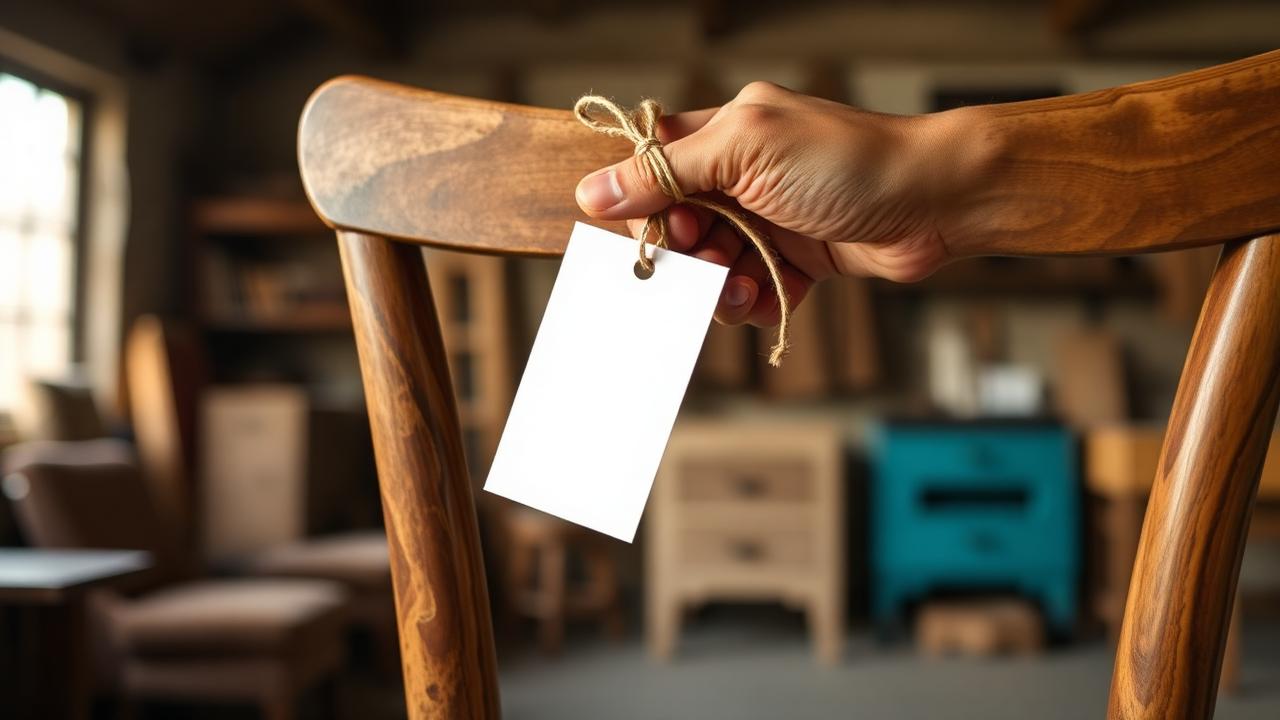
Private-label and OEM/ODM are the quiet end of the furniture export trade. The biggest, best-known retail furniture brands in your local market are almost certainly not making most of what they sell — they are buying it under their brand from manufacturers across India, Vietnam, Indonesia, China and Eastern Europe. This briefing demystifies how the model actually works on the Indian side.
OEM vs ODM vs private label — the terms
- OEM (Original Equipment Manufacturer) — You bring the design. The factory builds it under your brand.
- ODM (Original Design Manufacturer) — The factory has its own designs. You select from the catalog (or modify) and brand it as yours.
- Private label — A commercial framing more than a manufacturing one. The product ships under your brand, your packaging, your documentation. The product can be OEM or ODM underneath.
In practice, most programs blend the three: ODM-base SKUs lightly modified to your spec, branded as yours, shipped in your packaging.
What "your brand" actually covers
A serious private-label program controls:
- The brand name and logo on every visible surface (cartons, tags, assembly leaflets, fabric labels)
- The barcode (your GTINs, not the factory's)
- The country-of-origin labelling
- The serial number system
- The product care instructions
- The packaging artwork
- The user manual / assembly leaflet language and design
- The warranty card
- The retail-shelf-ready outer presentation if applicable
We can produce against any of these levels of customisation. The most common entry program is: factory carton + buyer's tag and barcode. The most complete program is: bespoke designed packaging with QR-coded assembly leaflet, retail-shelf-ready outer carton, RFID-tagged units.
Confidentiality
The single biggest concern any private-label buyer brings up: "How do I know the factory won't sell the same SKU to my competitor next quarter?"
The structural answer is in two documents:
- An NDA signed at the start, covering designs, specs and pricing
- An exclusivity clause in the manufacturing agreement covering specific SKUs in specific markets for a defined period
The practical answer is harder. A factory with a culture of short-termism will leak SKUs no matter what is on paper. The diligence is in the references — talk to other private-label clients of the factory. A factory running multiple private-label programs without leakage has a track record visible to its existing buyers.
Commercial terms that matter
- Sample fee — Usually USD 50–600 per SKU depending on complexity, often credited against first PO
- MOQ — Typically a 20' DV or 40' DV per SKU for entry programs
- Payment terms — 30% on PO, 70% on BL is the most common opening position; after 2–3 successful shipments, this often shifts to 30/70 against scan
- Tooling / mould charges — One-time, declared separately, owned by the buyer
- Annual review — Pricing reviewed annually, not per PO, for volume programs
Documentation that ships with private-label cargo
For a private-label program, the supplier prepares:
- Commercial invoice in your name (yes, this is fine — we are the shipper, you are the consignee/buyer)
- Packing list keyed to your SKU codes, not ours
- BL with your brand visible nowhere on the document
- COO (certificate of origin), GSP forms where applicable
- Product compliance certificates in your file name
- Fumigation certificate
- Photos pre-loading and post-loading
For US importers there are additional requirements (FCC labelling where relevant, Prop 65 statements). For EU, REACH and EUDR documentation. For the UAE, ESMA where applicable. We map these to the program at PO stage.
How to start
Send a brief. We'll come back with:
- A sample plan and indicative FOB
- An NDA template (or sign yours)
- A list of references we can put you in touch with
Frequently asked
Can the BL ship without the factory's name visible?
The shipper of record is the factory, by D' Emporio research law, but downstream documentation to your customer can carry your brand exclusively.
Can I source one SKU under my brand and have you stop selling that exact SKU to others?
Yes, with an exclusivity clause in the agreement covering defined markets and a defined period.
What's the smallest private-label program you take on?
Typically a 20' DV per SKU for entry-level programs.
Statistics referenced in this briefing are drawn from D' Emporio's proprietary research and stakeholder knowledge. The information remains the proprietary information of D' Emporio Global Pvt. Ltd.